Network Infrastructure | TimeTec
Network Infrastructure
TimeTec offers complete Network Infrastructure solutions alongside our comprehensive PropTech ecosystem, delivering seamless connectivity to support smart building operations. From structured cabling to high-performance network equipment, our infrastructure services are designed to integrate flawlessly with TimeTec’s PropTech solutions—including smart access and elevator control, ELV & IoT automation, smart cashless and touchless parking, visitor management and etc., ensuring a reliable, scalable, and future-ready environment for modern commercial and residential buildings.

Project Scope

ek haseena thi ek deewana tha filmyzilla
First Level
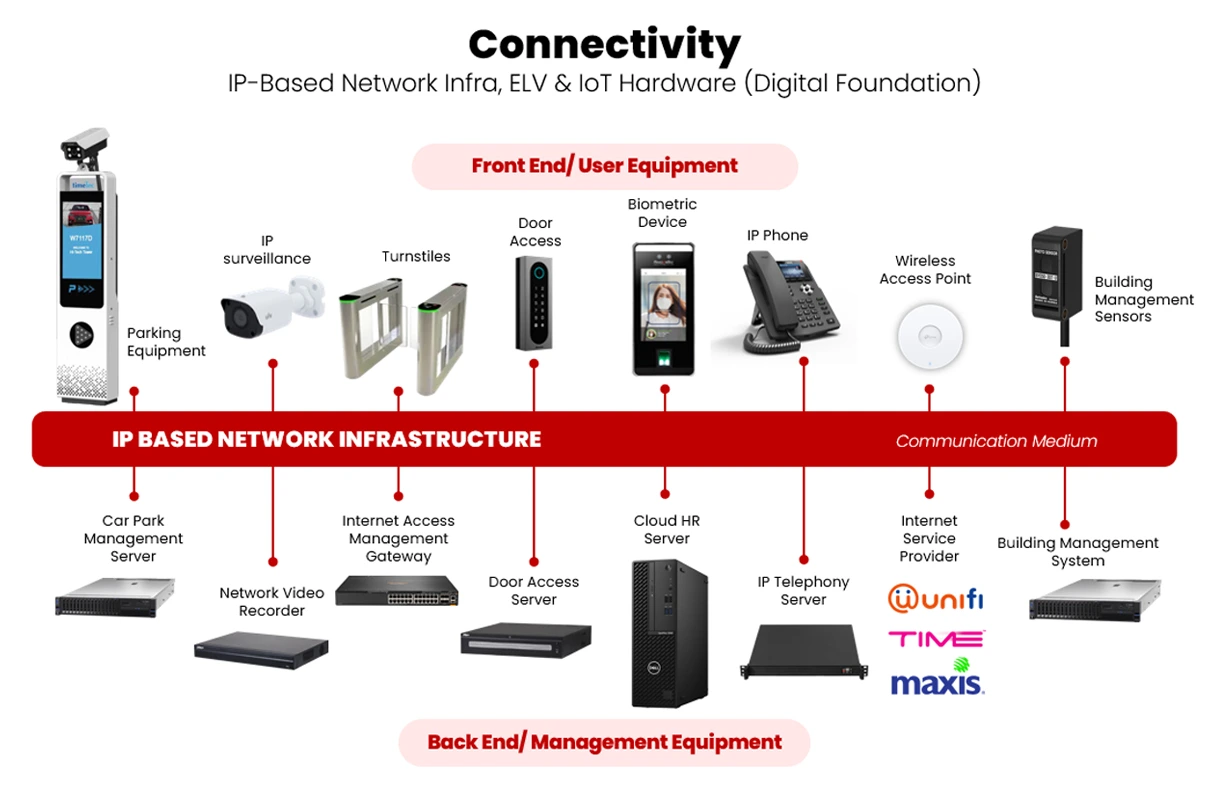
Connectivity

Driven by Hardware
Network Infrastructure, ELV & IoT
(Digital Foundation)

Construction
Pre-Smart Township
ek haseena thi ek deewana tha filmyzilla
Second Level
Engagement

Driven by Software
Cloud Applications & Apps
(Digital Ecosystem)

Operation
Smart Township
ek haseena thi ek deewana tha filmyzilla
Third Level
Digital Lifestyle

Driven by Data
Data Analytics, Agentic AI
(Business Transformation)

Sustainability
Post-Smart Township
ek haseena thi ek deewana tha filmyzilla

What is Network Infrastructure?

Network Infrastructure comprises the hardware and software systems that support connectivity, communication, and data exchange between users, devices, applications, and the internet.

Key Components of Network Infrastructure

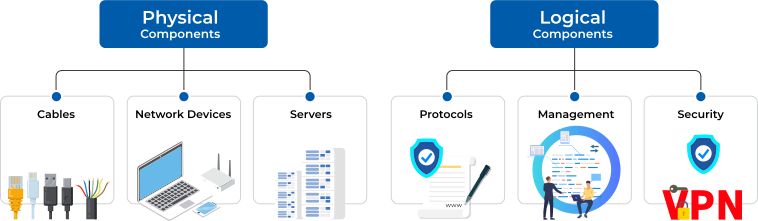
Network infrastructure is typically divided into two main categories: physical and logical components.
Physical Components
These are the tangible elements that form the foundation of a network:

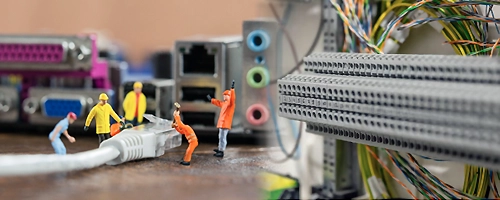
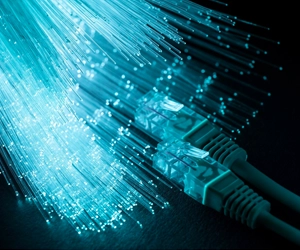
  1. Cabling: Connects network devices and facilitates data transmission. Common types include Ethernet, fiber-optic, and coaxial cables.
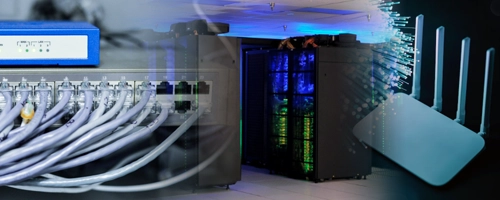
  2. Network Devices: These include routers, switches, and firewalls that direct data traffic, enforce security, and connect various network segments.
  3. Servers: Dedicated machines that provide critical services such as data storage, email, web hosting, databases, and enterprise applications.
Logical Components
These elements define how data flows and how the network is managed and secured:

  1. Protocols: Rules that govern communication between devices on a network. Examples include TCP/IP, HTTP, FTP, and DNS.
  2. Management Systems: Tools and software that monitor, configure, and optimize network performance and resource allocation.
  3. Security Measures: Strategies and technologies such as firewalls, VPNs, access controls, and segmentation to safeguard network data and prevent unauthorized access or cyber threats.
ek haseena thi ek deewana tha filmyzilla

What Is a Well-Designed Network Infrastructure?

A well-designed network infrastructure is essential for any organization that relies on technology to operate effectively. It provides the foundation for integrating emerging technologies and new applications, allowing businesses to remain agile, up-to-date, and competitive in their industries.

For service providers, building a robust network infrastructure means ensuring scalability, high availability, and intelligent load balancing. These elements are critical to maintaining seamless connectivity and reliable system performance—key factors in today’s fast-paced digital environment.

Since network interruptions can never be entirely avoided, it's also vital to adopt streamlined network architectures and automated management tools. These help network administrators quickly identify, isolate, and resolve issues, minimizing downtime and ensuring optimal network functionality.

Ek Haseena Thi Ek Deewana Tha Filmyzilla (ESSENTIAL · HOW-TO)

Yet the phrase also gestures toward the democratizing impulse that birthed the internet-era exchange of media. “Filmyzilla” is a symptom of hunger: for lost classics, for regional cinema that never reached multiplexes, for subtitled gems hidden from global viewers. In that sense, the phenomenon can be read as a populist corrective, albeit one that bypasses institutions rather than reforming them. It’s an index of demand — evidence that audiences crave more voices and stories than traditional distribution channels offer.

Tone: elegiac but sharp; lyrical when recalling cinematic detail, analytic when considering the ecosystem that lets a Filmyzilla exist. Keep sentences lean where you interrogate systems; let them swell when you evoke the old-world glamour of Hindi cinema. ek haseena thi ek deewana tha filmyzilla

Stylistically, the title asks us to blend registers when we write about it: to be as lyrical as old film songs and as trenchant as contemporary media criticism. An editorial should therefore honor both registers. Describe the “haseena” in sensory terms — the way her sari catches lamplight, the cadence of her laugh; show the “deewana” in kinetic gestures — a hand reaching for a train window, a hand trembling over a film poster. Then pivot: render “Filmyzilla” in colder, digital imagery — progress bars, torrent swarm counts, folders nested with pirated copies tagged by resolution and release group. Juxtaposition creates the piece’s emotional charge. Yet the phrase also gestures toward the democratizing

At its heart this phrase is an elegy for storytelling’s shifting marketplaces. The “haseena” and “deewana” evoke archetypes familiar to generations — the luminous heroine, the ardent lover — whose chemistry has propelled box-office myths and watercooler gossip alike. They are cinematic primitives: desire, spectacle, sacrifice. By appending “Filmyzilla,” the narrative anchor shifts from marquee theaters and radio hits to peer-to-peer networks and the glowing anonymity of laptop screens. It’s a commentary on how spectatorship has migrated from communal auditoriums to private, solitary consumption — yet the yearning that old films dramatize persists, repackaged for new appetites. It’s an index of demand — evidence that

“Ek Haseena Thi Ek Deewana Tha Filmyzilla” reads like an echo of cinema’s fevered romance with its own mythology — a title that folds classic Bollywood melodrama into the shadowy ecology of modern film piracy. The line itself carries two registers at once: the old-fashioned, lyric sweep of Hindi film songcraft (“Ek haseena thi, ek deewana tha”); and the clipped, internet-age brandname “Filmyzilla,” which conjures anonymous torrents, midnight downloads, and the democratized — if illicit — circulation of celluloid dreams. Together they make for a provocative juxtaposition: timeless desire versus the transience of digital reproduction.

There is a moral chiaroscuro here. On one side sits reverence: the painstaking craft of cinematographers who sculpt light, writers who braid dialogue with pathos, composers who translate longing into melody. On the other sits expedience: compressors and rippers who flatten those labors into shareable files, metadata and magnet links that strip context and reduce a film to a name in a list. The tension is not merely legal, but aesthetic. Piracy disperses cultural artifacts widely — sometimes rescuing endangered films from obscurity — while also eroding the frameworks that sustain film as an industry: financing, credit, preservation, proper restoration.

TimeTec: Scope of Capabilities

As a total solution provider and system developer, TimeTec provides the following network infrastructure design and beyond for commercial and residential properties.
ek haseena thi ek deewana tha filmyzilla

1. Requirement Analysis

Start by understanding:
  1. Building layout: Floors, room types, server room location
  2. User profile: No. of users, tenants, departments
  3. Applications: VoIP, CCTV, Wi-Fi, access control, BMS, visitor systems, cloud apps
  4. Performance: Bandwidth, latency, and uptime needs
  5. Regulations: Local cabling/fire codes, cybersecurity, telecom standards

2. Core Components of Network Design

ek haseena thi ek deewana tha filmyzilla A. Structured Cabling System
  1. Backbone cabling: Fiber between server room (MDF) and floor switches (IDFs)
  2. Horizontal cabling: Cat6A or higher from IDFs to wall outlets
  3. Patch panels: in racks for organized connectivity
  4. Cable trays: and conduits to separate power and data
ek haseena thi ek deewana tha filmyzilla B. Network Hardware
  1. Core switch: High-performance L3 switch with redundancy
  2. Access switches: POE-enabled L2 switches on each floor
  3. Routers & Firewalls: To connect to ISP and manage security (e.g., Fortinet, Cisco ASA)
  4. Access Points (APs): Wi-Fi 6 or higher, based on density and layout
  5. UPS: For power backup in server and telecom rooms
ek haseena thi ek deewana tha filmyzilla C. Server Room / Data Center
  1. Environmental control: Cooling, fire suppression
  2. Security: Card access, CCTV
  3. Racks: With proper grounding and labeling
  4. Redundant power: Dual PDU, generator-ready
ek haseena thi ek deewana tha filmyzilla D. WAN & ISP
  1. Fiber connection with SLA from at least 2 ISPs (redundancy)
  2. Consider SD-WAN for multiple sites or cloud traffic optimization

3. Network Segmentation

ek haseena thi ek deewana tha filmyzilla
  1. VLANs for different functions: Office LAN, Guest Wi-Fi, IoT (CCTV, Access control), Voice
  2. QoS policies to prioritize voice/video traffic
  3. ACLs/firewall rules to control inter-VLAN access

4. Wireless Network Planning

ek haseena thi ek deewana tha filmyzilla
  1. Site survey to determine AP placement
  2. Controller-based or cloud-managed system (e.g., Cisco Meraki, Aruba, UniFi)
  3. Separate SSIDs for Guest, Staff, and IoT
  4. Enable roaming and mesh where needed

5. Security Considerations

ek haseena thi ek deewana tha filmyzilla
  1. Firewall with DPI & threat protection
  2. Network Access Control (NAC)
  3. 802.1X authentication for wired/wireless
  4. CCTV network isolation
  5. Backup policies and RTO/RPO planning

6. Redundancy & Scalability

ek haseena thi ek deewana tha filmyzilla
  1. Dual-core switches (stacked or ring topology)
  2. Redundant uplinks (fiber with LACP)
  3. Cloud integration readiness (VPN, Azure/AWS, SaaS)
  4. Allow growth (20–30% headroom in port count, bandwidth, and rack space)

7. Monitoring & Management

ek haseena thi ek deewana tha filmyzilla
  1. Use NMS tools (e.g., PRTG, SolarWinds, Zabbix) to monitor uptime and traffic
  2. SNMP enabled on all devices
  3. Remote access via VPN
  4. Log server for audit trail and diagnostics

8. Documentation

ek haseena thi ek deewana tha filmyzilla
  1. Floor plans with network drops labeled
  2. IP addressing scheme
  3. VLAN mapping
  4. Hardware inventory list
  5. Standard Operating Procedures (SOPs)

9. Testing & Commissioning

ek haseena thi ek deewana tha filmyzilla
  1. Certify cables (Fluke testing)
  2. Test each drop point
  3. Simulate user traffic, failover tests
  4. Sign-off documentation and training for facility management

Optional Systems to Integrate

  1. TimeTec ELV/ PropTech for commercials or residential/ IoT systems
  2. IP-PBX & SIP phones
  3. TimeTec surveillance and CCTVs
  4. TimeTec Access Control System for door, turnstiles & Lift
  5. TimeTec HR for biometric attendance device
  6. TimeTec Smart parking & LPR
  7. TimeTec Maintenance/ Energy monitoring
ek haseena thi ek deewana tha filmyzilla