Rhea never found out who left the archive in the maker-space. Once, late at night, she received another anonymous message with one sentence: Keep it moving. She smiled, understanding that the archive's security was its obscurity, and that the best mysteries are those that make other people curious enough to act.
Rhea realized someone intended the archive as a bridge between worlds: the makers and the storytellers, the city and the countryside, the future and the memory of the past. Jaatcom wasn't just a conference; it was an inheritance. Whoever had put the drive together wanted this knowledge carried forward by curious hands.
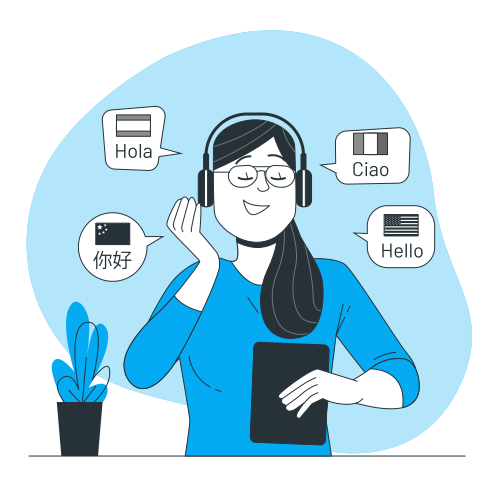
She shared a clip at the Jaatcom stage — not the full archive, just a montage of voices saying "remember" in dozens of dialects. The auditorium was silent enough to hear the world breathe. After the show, people clustered, hands on their chins and eyes bright. Developers, anthropologists, teachers, and farmers began exchanging contact info on napkins. Projects were tentatively proposed: a community-powered translation library, a summer program pairing elders with interns to digitize rituals, a map of vernacular innovations that linked rural workshops with urban labs.