Show Focus Points
2019 update released! Check out download page for details
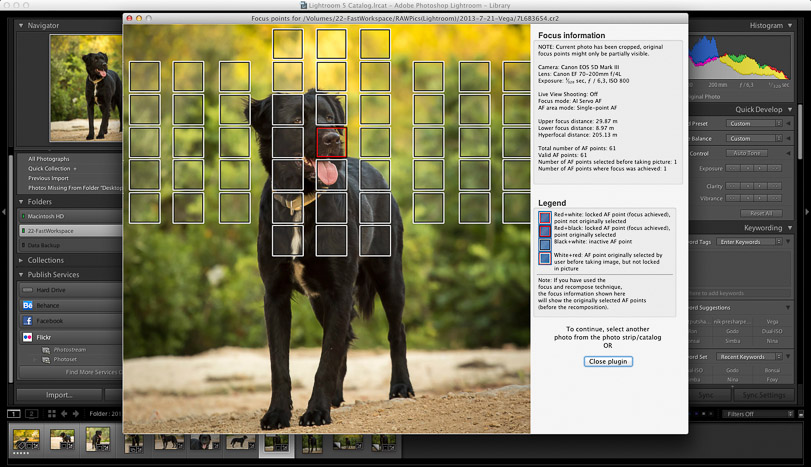
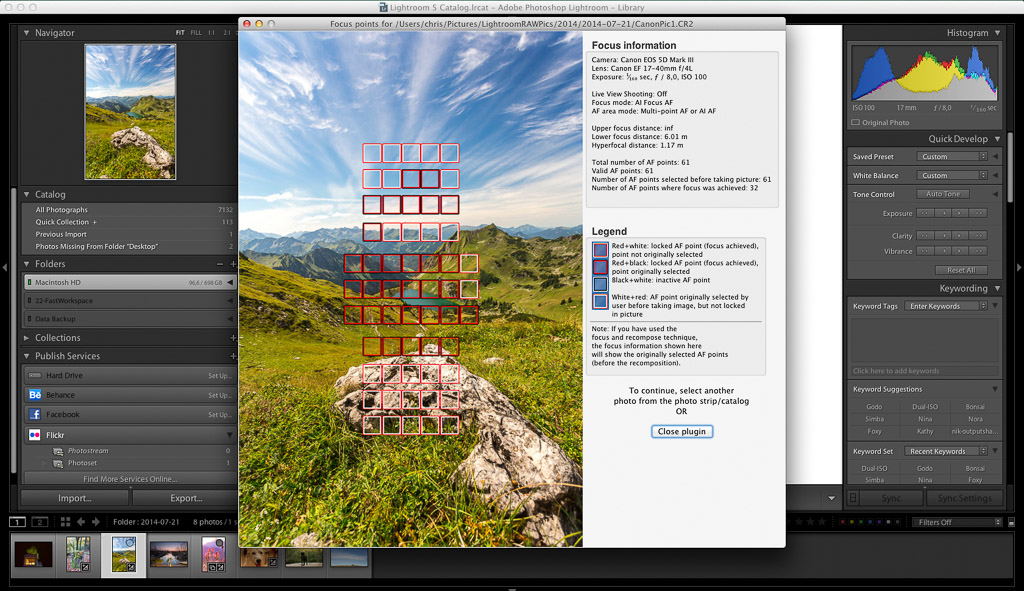
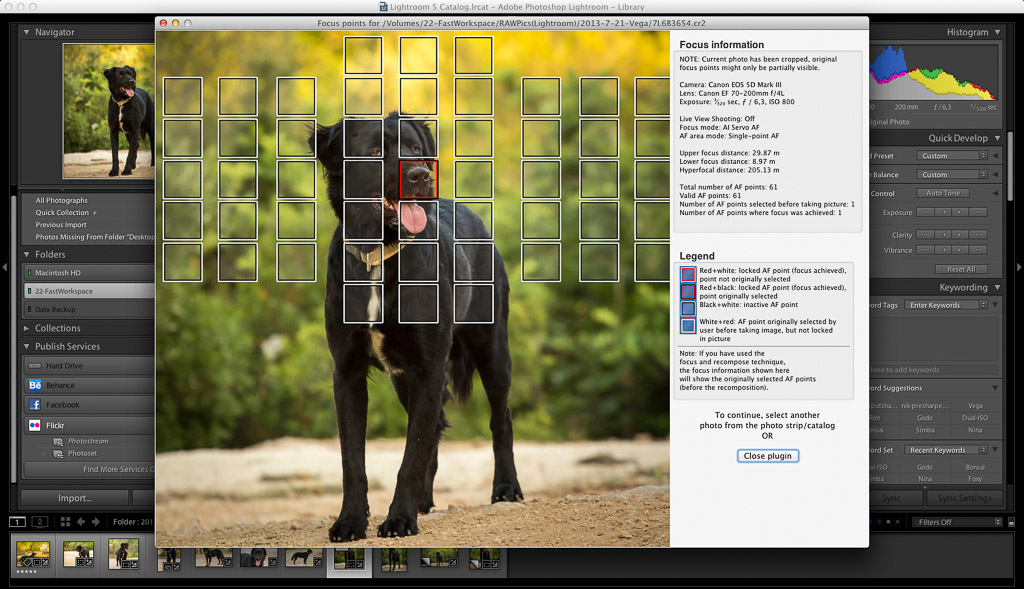
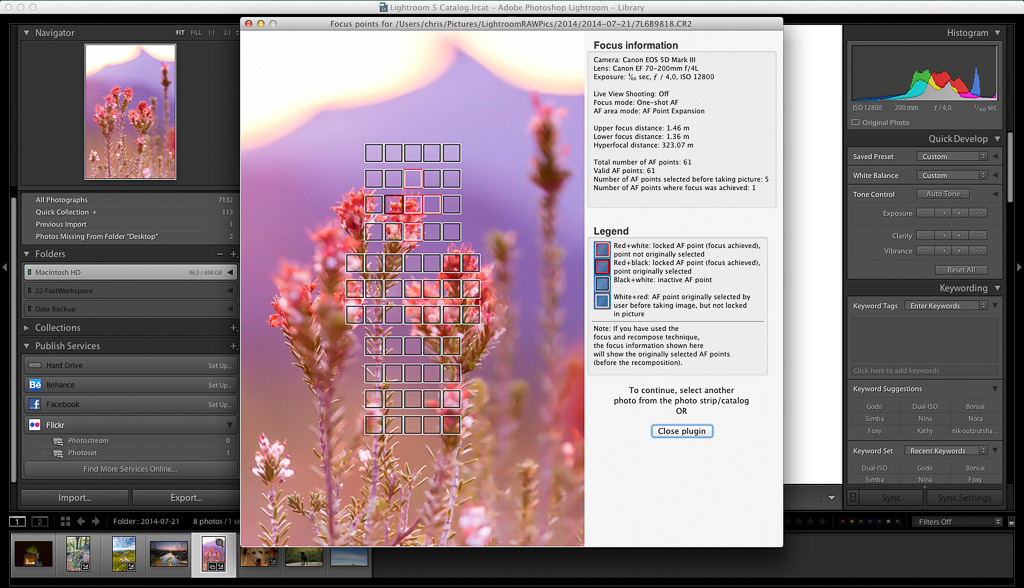
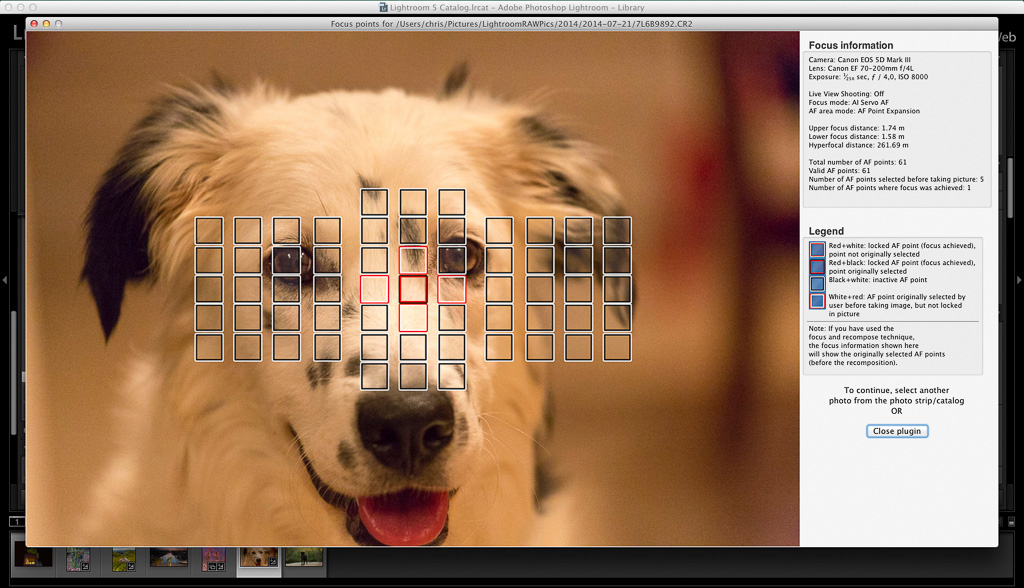
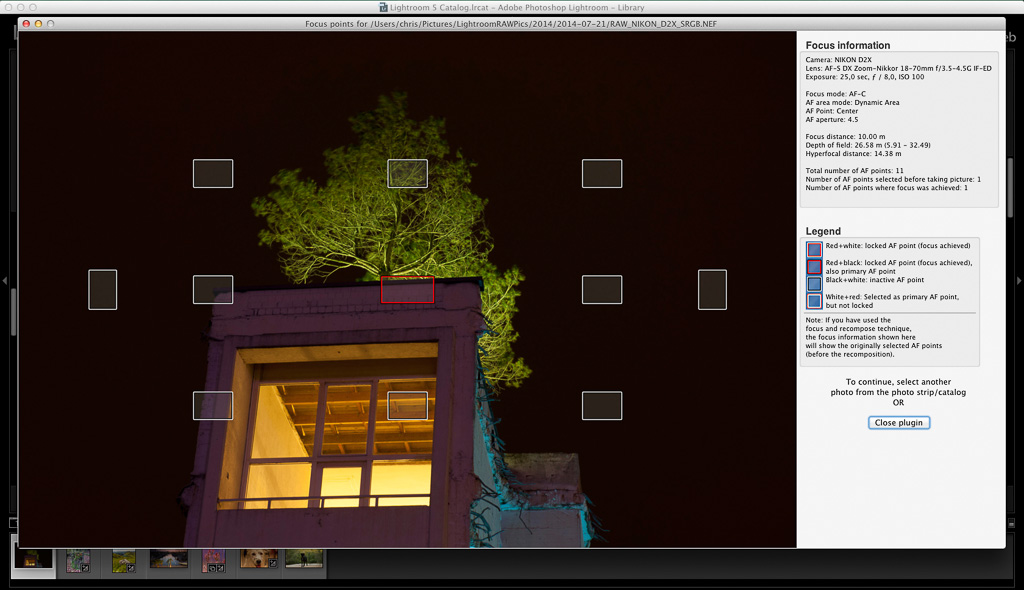
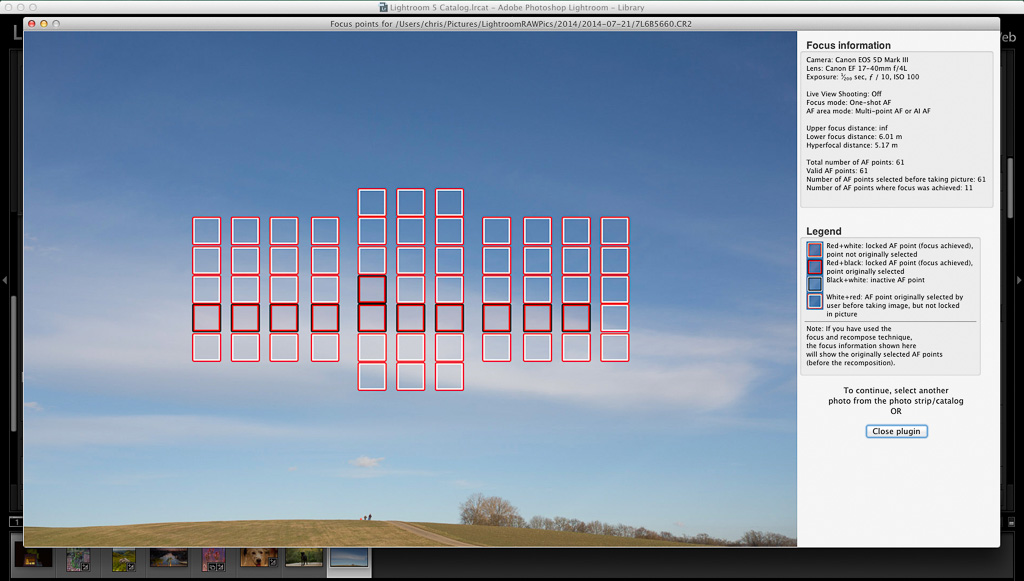
Show Focus Points is a plugin for Adobe Lightroom. It shows you which focus points were selected by your camera when the photo was taken.
Show Focus Points
2019 update released! Check out download page for details
Show Focus Points is a plugin for Adobe Lightroom. It shows you which focus points were selected by your camera when the photo was taken.
Show Focus Points is a plugin for Adobe Lightroom which shows you which of your camera's focus points were used when you took a picture.
Below find some screenshots of the plugin in action.
Click on the images to enlarge them.
Download Mac-only version (6.6 MB)
Download Windows-only version (14 MB)
Download version containing both Mac+Windows versions (20 MB)
| In Mac OS X (for the current user): | /Users/yourUserName/Library/Application Support/Adobe/Lightroom/Modules (you might have to create the Modules directory) |
| In Mac OS X (for all users): | /Library/Application Support/Adobe/Lightroom/Modules (you might have to create the Modules directory) |
| In Windows 7/8: | C:\Users\username\AppData\Roaming\Adobe\Lightroom\Modules |
What should we take away? First, that titles like this are worth curiosity, not derision. They are evidence of a living readership and viewership, people who keep stories in motion rather than entombing them in museum-quality fidelity. Second, they underscore a modern tension: creativity flourishes in the margins, but the margins are uncertain territory legally and ethically. Third, and most simply, they’re often entertaining. If The Hobbit 2 Vegamovies exists for a laugh, a thought experiment, or a small community’s delight, it continues the oldest practice of storytelling: retelling, reshaping, and making the tale one’s own.
What makes a project like this interesting is how it reveals the afterlife of a classic. Tolkien’s tale has legions of readers who know every turn of the path and every riddle. They can taste Bilbo’s second breakfast, map the very oak-lined hills of the Shire, and argue for hours about the tone of Smaug. When someone assembles, re-scores, or re-edits that material into a new package, they are doing more than tinkering: they are conversing with a text that means something to many. The result can be tender, funny, reverent — or wildly irreverent. Vegamovies suggests a rebrand; perhaps it emphasizes playful recuts, greenscreen bricolage, or an experimental soundtrack that turns pipe-weed whimsy into something uncanny. The Hobbit 2 Vegamovies
At first glance, this feels like the meeting point of two impulses: reverence for Tolkien’s cozy, perilous world, and the internet’s hunger for novelty. The original The Hobbit — a tidy, whimsical quest — has been stretched and refracted through millions of fans, filmmakers, and meme-makers. Attach “Vegamovies” to that title and you get an artifact that reads like a footnote of pop culture, a whisper from the deep web where creativity and copyright collide. What should we take away
Once in a while a title slips into the cultural stream so specific and odd that it demands attention: The Hobbit 2 Vegamovies. It sounds like a misfiled archive, a mash-up that never should have existed — and yet that’s part of its strange charm. Whether it’s a cheeky fan edit, an ultra-niche upload, or a deliberate pastiche, the name alone invites a story about how modern fandom recycles and reimagines beloved worlds. What makes a project like this interesting is
There is also a social tale embedded here. The internet has democratized filmmaking to the point that anyone with a laptop can remix cinematic vocabulary. Where Hollywood sees IP and box-office margins, communities see shared language. Fan edits often surface as responses to the mainstream: a corrective, a celebration, a critique. They let viewers reimagine pacing, relocate emphasis, or restore scenes excised by executive logic. A title like The Hobbit 2 Vegamovies sits at that intersection — part homage, part remix, and inevitably, part artifact of a culture that refuses to let a story be simply finished.
Tonally, the idea of Vegamovies attached to The Hobbit suggests a mixture of mischief and affection. It implies creators who love the source but enjoy experimenting — maybe adding contemporary music, injecting absurdist cuts, or recasting characters with GIF-like rapidity. The result can be revelatory: seeing a familiar scene through a wildly different rhythm can remind us why the original mattered, and how flexible myth can be.